




Nice cars other than x-fire

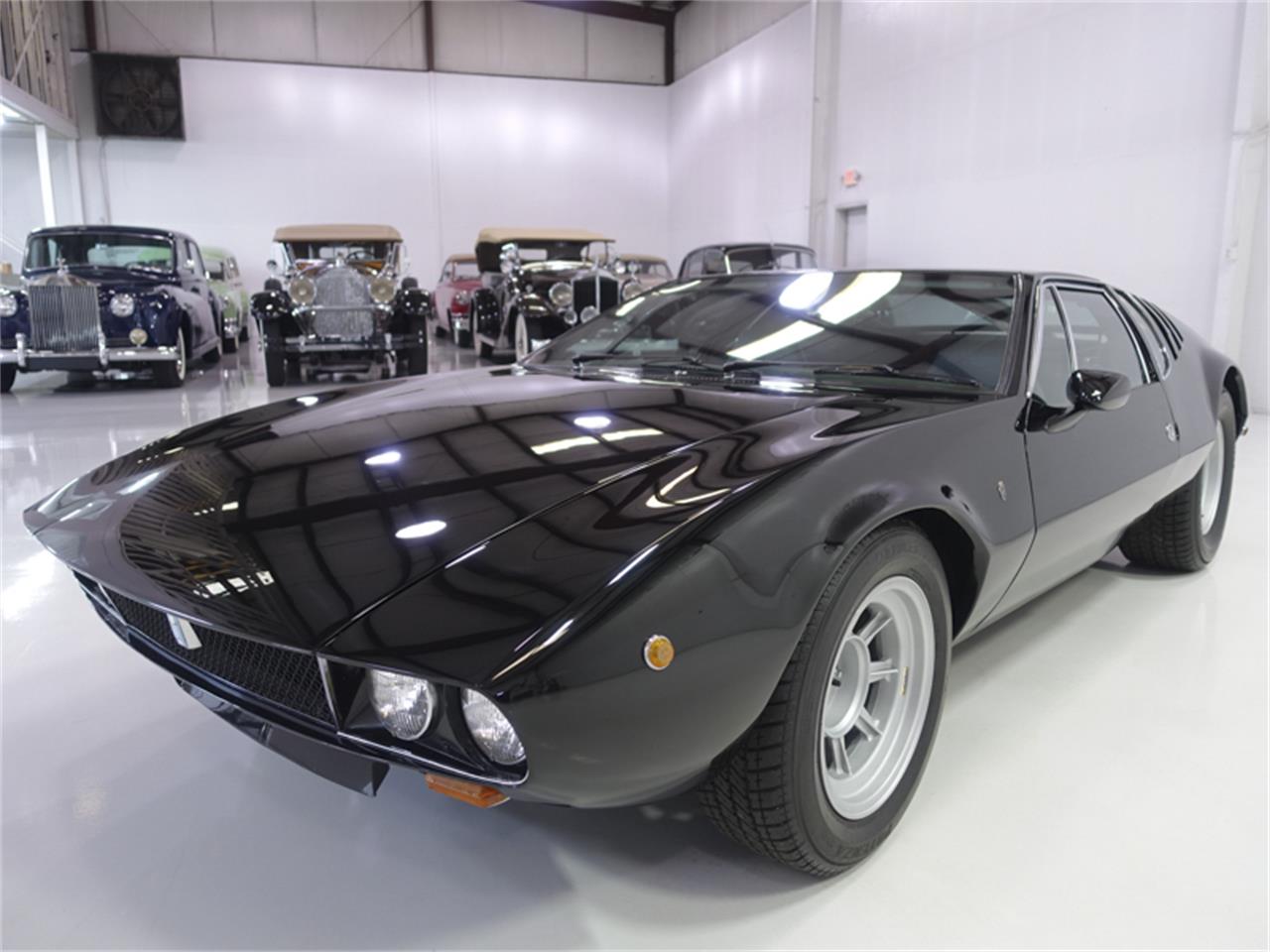
When Alejandro de Tomaso had a bitter falling out with Carroll Shelby, he did not just get angry. He got even. To exact his revenge, he built a mid engine Italian exotic and named it the Mangusta, the Italian word for mongoose, the animal famous for killing cobras.

To ensure his new car looked the part, he hired legendary designer Giorgetto Giugiaro. The result was an absolute masterpiece of automotive architecture. Standing barely 43 inches tall, the Mangusta featured a menacing, low slung profile defined by its spectacular center hinged gullwing engine doors. Underneath those glass covers sat a reliable, roaring Ford V8 producing up to 306 horsepower.

This combination of brutal American muscle and bespoke Italian tailoring set a styling benchmark for mid engine supercars that lasted for decades. Today, only about 200 of the original 401 models still exist, making this beautiful revenge project incredibly rare

View attachment 142096
 
In the mid 1950s, Oldsmobile held a magical sweet spot in American culture, blending youthful performance with high end luxury. Positioned right below Cadillac, the flagship 1956 Ninety Eight Holiday represented the absolute pinnacle of GM engineering and jet age style.

At the heart of its popularity was the legendary Rocket V8 engine. For 1956, the 324 cubic inch motor pushed out a robust 240 horsepower, delivering effortless highway passing power. Paired with the newly introduced Jetaway Hydra Matic transmission, driving felt remarkably refined.

Styling was equally magnetic. The 98 Holiday featured a sweeping two tone paint scheme, dramatic chrome accents, and an open air pillarless hardtop silhouette that turned heads on every boulevard. Inside, options like power seats, power windows, and padded dashes rivaled top tier luxury cars.

During this golden era, Oldsmobile proved that ambitious American buyers could enjoy Cadillac style with genuine V8 power.

1785075809936.webp
 
Long before modern luxury pickups existed, a Chicago based manufacturer decided blue collar workers deserved some high end style. Founded by C.A. Tilt, the Diamond T Motor Car Company earned a legendary reputation as the Cadillac of trucks, and their ultimate light duty masterpiece was the Model 201.

Introduced in 1938, this one ton pickup shared absolutely zero DNA with standard passenger cars. It sat on a heavy duty, X braced frame built for serious hauling. Yet visually, it belonged at a country club. The exterior featured sweeping pontoon fenders, a rakish split windshield that cranked open for ventilation, and a massive barrel shaped chrome grille.

Under the hood sat a robust Hercules inline six engine offering 91 horsepower. Because of its premium craftsmanship, the 201 cost significantly more than a standard Ford or Chevrolet.

With roughly seven thousand units built through 1949, this rare workhorse proved that extreme durability could wear a flawlessly tailored suit.

1785112270193.webp
 
Buick's most exclusive model wasn't built to whisper. It was built to compete directly with Cadillac senior sedans, sharing the same GM chassis while Buick's marketing quietly leaned on a different pitch, appealing to buyers who wanted genuine luxury without Cadillac's reputation for showing off. The 90 Limited stretched a full 140 inch wheelbase and 219.5 inches overall, making it the longest Buick ever built at the time.

This limousine body style sat at the very top of that lineup, priced at $2,450 in 1939, the single most expensive Buick money could buy that year. A movable glass partition separated the chauffeur from passengers riding in back, and Buick built only 423 of these limousines total, compared to over a thousand of the plainer touring sedan. Power came from a 320 cubic inch straight eight making 141 horsepower, modest by today's standards but plenty for gliding a two ton luxury car down the road.

Buick sold barely 1,451 Series 90 cars total that entire year. Whatever Buick represents today, this once meant genuinely competing with Cadillac for the wealthiest buyers in America.
1785112416945.webp
 
For decades, Buick dealerships catered exclusively to executives seeking softly sprung highway cruisers. But at the absolute peak of the muscle car wars in 1970, the polite luxury brand suddenly decided to build a terrifying street brawler.

When General Motors lifted its ban on putting large engines in midsize cars, engineers unleashed the GSX. Available only in Saturn Yellow or Apollo White, this outrageous package replaced subtle chrome with a chin spoiler, a massive rear wing, and loud racing stripes.

The real nightmare hid beneath the hood. Buyers who checked the Stage 1 option received a 455 cubic inch V8. To appease panicked insurance agents, Buick rated the motor at just 360 horsepower. In reality, it generated a colossal 510 pound feet of torque. That record breaking figure remained unmatched by any American production car until the Dodge Viper arrived decades later.

With only 678 units built, it was a beautifully brief moment of pure madness.
1785441142415.webp
 
Nuccio Bertone had a problem in 1969. Lancia's design work belonged almost entirely to Pininfarina, and Bertone wanted in badly enough to build something impossible to ignore rather than simply ask. He bought a wrecked Lancia Fulvia HF from a friend, stripped it down, and handed the remains to designer Marcello Gandini with instructions to build something so radical that Lancia would have no choice but to notice.

What came back stood just 33 inches tall, a wedge so extreme that entering the car meant lifting the entire windshield forward on hydraulics and walking straight in over the nose, since there were no conventional doors at all. Bertone reportedly kept the whole project secret from Lancia until shortly before revealing it at the 1970 Turin Motor Show, worried the idea would get vetoed if anyone saw it coming. Lancia's chairman called Bertone himself the following February, and within a year the production Stratos rally car existed because of that phone call.

The Zero itself never got closer to a showroom than a museum floor. Every sharp edged wedge shaped supercar that followed through the 1970s and 80s owes something to a car nobody could actually buy
1785441335313.webp
 
In 2004, Chrysler was mostly known for selling practical minivans and comfortable family sedans. Then, entirely out of nowhere, they dropped a nuclear bomb on the Detroit Auto Show.

The ME Four Twelve was a mid engine hypercar that made absolutely zero sense for the brand. Its name was a literal warning label, standing for Mid Engine, Four turbos, and Twelve cylinders. Behind the driver sat a heavily modified, quad turbocharged six liter AMG V12.

Generating a catastrophic 850 horsepower, this carbon fiber spaceship could rocket from zero to sixty in 2.9 seconds. Its projected top speed was 248 miles per hour, aiming directly at the upcoming Bugatti Veyron.

But automotive politics struck hard. Corporate overlords at DaimlerChrysler were allegedly furious that a lowly American division had built a machine far faster than their flagship Mercedes SLR McLaren. The project was swiftly executed, leaving behind the most magnificent and baffling prototype Detroit ever built
1785441459068.webp
 

Users who are viewing this thread

Back
Top