
Navigation
Install the app
How to install the app on iOS
Follow along with the video below to see how to install our site as a web app on your home screen.
Note: This feature may not be available in some browsers.
More options
Style variation
You are using an out of date browser. It may not display this or other websites correctly.
You should upgrade or use an alternative browser.
You should upgrade or use an alternative browser.
Guess the car and year.
- Thread starter Murray20c8
- Start date






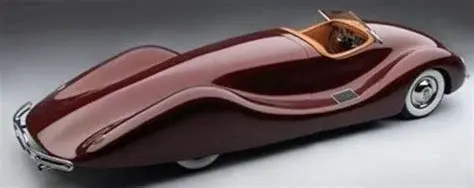
Hmmmm…….


Dave91TM
Power User






Had to look it up. There is a pic of the front it wasn't very pretty.
- Designed and built by mechanical engineer Norman Timbs in the late 1940s, it featured a custom aluminum body over a steel chassis and was inspired by pre-war Auto Union race cars.
The Timbs Special had a rear-mounted 1947 Buick straight-8 engine placed just forward of the rear wheels, contributing to its distinctive silhouette.
After changing hands multiple times and even serving as a children's play structure, the car was meticulously restored and won its class at several major concours events before being destroyed in the 2018 Woolsey fire.
Dave91TM
Power User
I'm guessing late 40's Nash.



- Thread starter
- #65
NadaI'm guessing late 40's Nash.

Steve McQueen’s 1952 Hudson Wasp Is Heading to Auction
A 1952 Hudson Wasp that the late Steve McQueen is said to have “loved and babied” will be auctioned off by RM Sotheby’s in October.
 robbreport.com


Ed "Big Daddy" Roth...................
Dave91TM
Power User
I thought the split front windshield had met its demise by 1952... but as I am oft told "Wrong.....again"Nada
Steve McQueen’s 1952 Hudson Wasp Is Heading to Auction
A 1952 Hudson Wasp that the late Steve McQueen is said to have “loved and babied” will be auctioned off by RM Sotheby’s in October.
Dave91TM
Power User
Hispano Suiza Carmen, an electric hypercar
Interesting looking vehicle. Not exactly my taste but it would definitely be a head turner.....Hispano Suiza Carmen, an electric hypercar
I admit that I am familiar with a few....



Obviously German. Has that VW beetle took....
Interesting take . Does look German , because it is ! But not a People's Car .Obviously German. Has that VW beetle took....
The Adler 2.5-litre (in German Adler 2,5 Liter) was a sensation when first presented by Adler at the Berlin Motor Show early in 1937, although this did not convert into correspondingly sensational sales.[1]
Adler 2.5 litre
Overview
Manufacturer
Adlerwerke
Also called
Adler Typ 10
Autobahn Adler
Production
1937 – 1940
5,295 units
Assembly
Frankfurt am Main
Designer
Karl Jenschke
Body and chassis
Body style
“ Schiebedach Limousine” ( sloping roof saloon)
Cabriolet with 2 or 4 seats
Sport-Limousine (2-seater)
Layout
FR layout
Powertrain
Engine
2,494 cc 6 cylinder in-line
Transmission
4-speed manual
Synchromesh on top 3 forward ratios
Dimensions
Wheelbase
2,800 mm (110.2 in)
Length
4,635 mm (182.5 in)
(saloon & cabriolets)
4,680 mm (184.3 in)
(Sport-Limousine)
Width
1,740 mm (68.5 in)
Height
1,650 mm (65.0 in)
(saloon & cabriolets)
1,500 mm (59.1 in)
(Sport-Limousine)
Adler 2.5-litre 2-seater cabriolet
The rear wheels on the Sport-Limousine were largely covered by the bodywork (“spats”), a styling cue which in 1939 was adopted on the saloon and cabriolet models as well.
The gear lever on the Autobahn Adler, though partially hidden by the steering wheel in this picture, can here be seen sticking out from the centre of the dash board.
Production got under way in November 1937. Seen as a successor for the six cylinder Adler Diplomat, it was an executive sedan/saloon featuring a strikingly streamlined body designed by Karl Jenschke (1899–1969) who till 1935 had been the Director of Engineering with Steyr-Daimler-Puch.[1] Jenschke's last creation during his time with Steyr had been the Steyr 50 which the Adler 2.5-litre, though larger, closely resembled.
Both on account of its uncompromisingly stream-lined silhouette and because its launch coincided with Germany’s first Autobahn construction boom, the car was popularly known as the Autobahn Adler.
The body for the four-door fast back saloon came from Ambi-Budd whose Berlin based German business made the steel bodies for several of Germany’s large automakers in the decade before the war. The two- and four-door cabriolet bodies came from Karmann of Osnabrück.
Last edited:
Dave91TM
Power User
A Google search of Bimbo 46 might not identify the car but may still have some interesting results. No, I did not try.I admit that I am familiar with a few....View attachment 134630
- Thread starter
- #77
I heard it was built in Dildo Newfoundland!I admit that I am familiar with a few....View attachment 134630
- Thread starter
- #79
It's a K-car, no not a Dodge K-car. But a Kei car! lol
Odd unit. Apparently called........Autozam AZ-1 .It's a K-car, no not a Dodge K-car. But a Kei car! lol
Users who are viewing this thread
Total: 2 (members: 0, guests: 2)