




Gas: ethanol

Resurrecting an old thread about Ethanol/Gasoline blends. It seems that since the first post in this thread in October 2019 where 10% Ethanol was in regular fuel only with none in premium. Then a couple of years ago 10% was also mandated Canada-wide for premium.

The rules are changing yet again apparently. Filling up the daily driver this morning @ Costco I see the regular 87 Octane now hos 15%, premium 91 Octane is still freshly posted as 10%.

Going on the past Ethanol doctrine, I suspect we might see 15% in premium gas in a year or so, possibly less.

Damn!

LateLifeCrisis
There's this from the internut....... seems it depends on a few different factors. We may end up having to dilute 100 low lead at some point....

In Canada, the ethanol content in premium gasoline isn’t uniform across all brands and provinces—it depends on the fuel supplier and local regulations.
National and provincial rules
Federally, Canada’s Renewable Fuels Regulations require gasoline producers to ensure an average of 5% ethanol across all grades they sell. �
Provinces can (and do) set higher mandates. For example:
Manitoba requires at least 10% ethanol in all gasoline sold. �
Ontario is moving toward 13% by 2028 and 15% by 2030, which pushes blends higher over time. �
Other provinces (e.g., BC, Alberta, Saskatchewan) often see E5–E10 blends depending on the brand and region. �
Because the 5% rule is an average by brand, many retailers historically kept premium (91/93 octane) ethanol‑free or very low, while putting more ethanol (up to 10%) into regular and mid‑grade to meet the average. �
What you’ll actually find at the pump today
Ethanol content in premium gas varies by brand and has been shifting:
Some brands explicitly sell ethanol‑free premium:
Canadian Tire: “up to 10% ethanol in regular and mid‑grade; no ethanol in premium.” �
Shell V‑Power NiTRO+ premium: marketed in Canada as not containing ethanol. �
Some “top tier” 91‑octane premiums are also described as having no ethanol added. �
Other brands and regions now include ethanol in premium:
Several sources note that many premium grades now contain up to 10% ethanol (E10), especially where provincial rules or supply changes have pushed ethanol into all grades. �
In some cases, companies state that all grades, including premium, contain up to 10% ethanol to comply with regulations. �
Historically, a common pattern was:
Regular: often E10 (up to 10% ethanol)
Mid‑grade: often E5–E10
Premium: often E0–E5, sometimes E10 depending on brand/province �
But that’s no longer universal; in several markets premium is now E10 as well. �
How to know for sure at your station
Because it varies:
Check the small yellow/orange ethanol label on the pump; Canadian regulations require stations to indicate which grades “may contain up to X% ethanol.” �
Look at the brand’s website or fuel specs (e.g., Shell, Canadian Tire, Petro‑Canada, Esso) for their current blend info in your province.
If you need guaranteed ethanol‑free fuel (e.g., for small engines, boats, or certain performance cars), confirm with the specific station or consider dedicated ethanol‑free gasoline products where available
 
What I have noticed is very few stations seem to keep their 'may contain' stickers up to date. We have stations that don't have stickers on any of the choices... lol... I think many stations here tat do have stickers are displaying 5 and 10% on the 87 and 89. Just a guess what the higher octanes have. Petro Canada here bumps their 91 up to 94 by adding ethanol.
 
There's this from the internut....... seems it depends on a few different factors. We may end up having to dilute 100 low lead at some point....

In Canada, the ethanol content in premium gasoline isn’t uniform across all brands and provinces—it depends on the fuel supplier and local regulations.
National and provincial rules
Federally, Canada’s Renewable Fuels Regulations require gasoline producers to ensure an average of 5% ethanol across all grades they sell. �
Provinces can (and do) set higher mandates. For example:
Manitoba requires at least 10% ethanol in all gasoline sold. �
Ontario is moving toward 13% by 2028 and 15% by 2030, which pushes blends higher over time. �
Other provinces (e.g., BC, Alberta, Saskatchewan) often see E5–E10 blends depending on the brand and region. �
Because the 5% rule is an average by brand, many retailers historically kept premium (91/93 octane) ethanol‑free or very low, while putting more ethanol (up to 10%) into regular and mid‑grade to meet the average. �
What you’ll actually find at the pump today
Ethanol content in premium gas varies by brand and has been shifting:
Some brands explicitly sell ethanol‑free premium:
Canadian Tire: “up to 10% ethanol in regular and mid‑grade; no ethanol in premium.” �
Shell V‑Power NiTRO+ premium: marketed in Canada as not containing ethanol. �
Some “top tier” 91‑octane premiums are also described as having no ethanol added. �
Other brands and regions now include ethanol in premium:
Several sources note that many premium grades now contain up to 10% ethanol (E10), especially where provincial rules or supply changes have pushed ethanol into all grades. �
In some cases, companies state that all grades, including premium, contain up to 10% ethanol to comply with regulations. �
Historically, a common pattern was:
Regular: often E10 (up to 10% ethanol)
Mid‑grade: often E5–E10
Premium: often E0–E5, sometimes E10 depending on brand/province �
But that’s no longer universal; in several markets premium is now E10 as well. �
How to know for sure at your station
Because it varies:
Check the small yellow/orange ethanol label on the pump; Canadian regulations require stations to indicate which grades “may contain up to X% ethanol.” �
Look at the brand’s website or fuel specs (e.g., Shell, Canadian Tire, Petro‑Canada, Esso) for their current blend info in your province.
If you need guaranteed ethanol‑free fuel (e.g., for small engines, boats, or certain performance cars), confirm with the specific station or consider dedicated ethanol‑free gasoline products where available

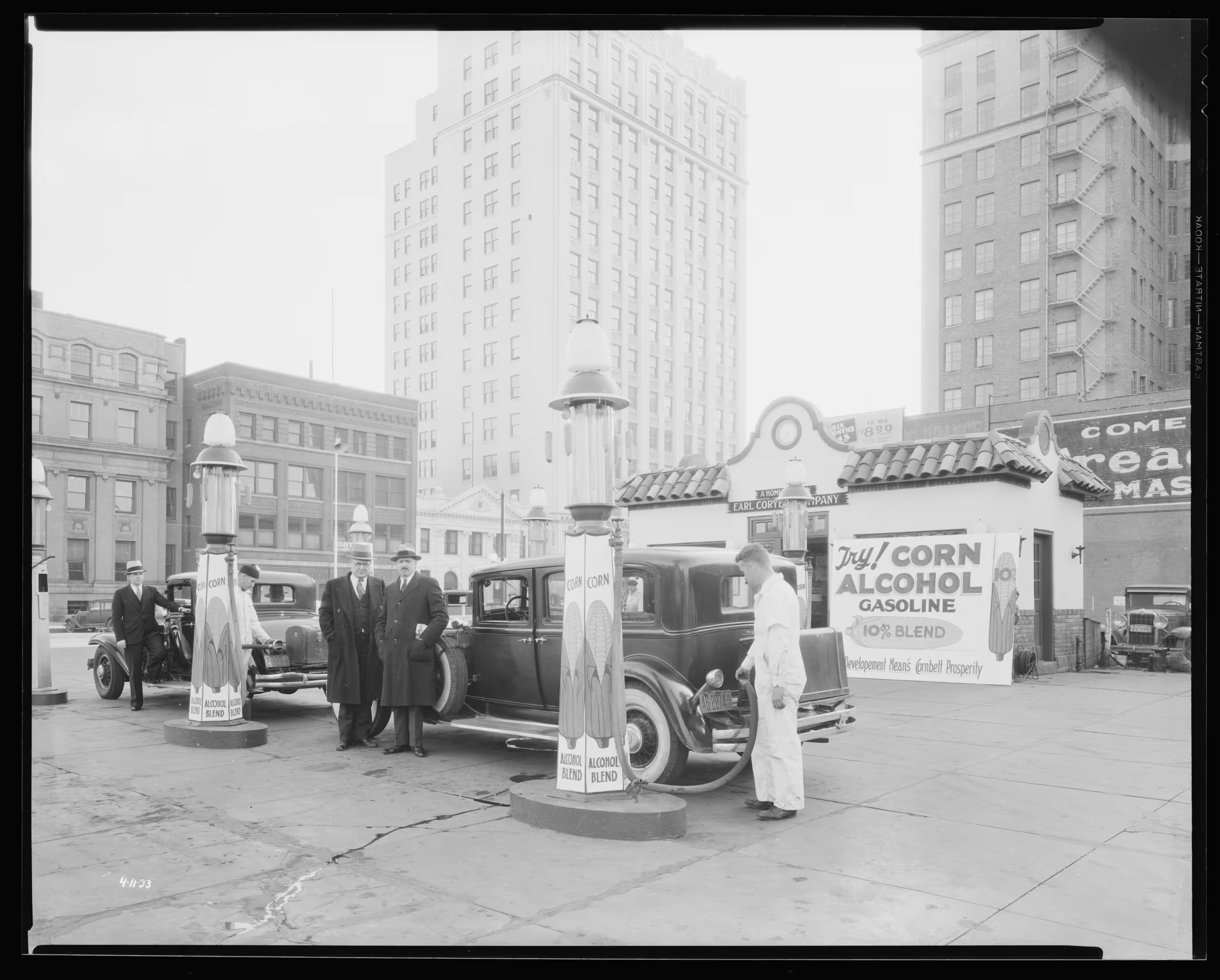
For years there's been crowing about ethanol not increasing the cost of gasoline, and in fact some eco-types used to claim that because blending ethanol reduced the amount of oil needed to produce fuel it worked out to be far less expensive than "pure" fuel made from oil.

The link here sort of destroys that myth....it seems on average that ethanol is, more often than not, more expensive to produce and more expensive to transport to the point of blending (The variation is due to the commodity price fluctuations in oil costs, such as the current middle east conflict). Then, factor in that ethanol is 30% +/- lower in energy content offset by reduced need for petrochemicals to raise octane levels and anyone with a calculator can work out how much retail fuel prices are inflated.

OTOH, the eco-types seem to ignore the huge differential in other resources needed to make ethanol vs gasoline (water being the big one).

Doesn't speak highly of the big thinkers who promote the use of ethanol to my way of thinking-with a carve out for producers of scotch/rye/bourbon and other valuable ethanol uses.


LLC
 
For years there's been crowing about ethanol not increasing the cost of gasoline, and in fact some eco-types used to claim that because blending ethanol reduced the amount of oil needed to produce fuel it worked out to be far less expensive than "pure" fuel made from oil.

The link here sort of destroys that myth....it seems on average that ethanol is, more often than not, more expensive to produce and more expensive to transport to the point of blending (The variation is due to the commodity price fluctuations in oil costs, such as the current middle east conflict). Then, factor in that ethanol is 30% +/- lower in energy content offset by reduced need for petrochemicals to raise octane levels and anyone with a calculator can work out how much retail fuel prices are inflated.

OTOH, the eco-types seem to ignore the huge differential in other resources needed to make ethanol vs gasoline (water being the big one).

Doesn't speak highly of the big thinkers who promote the use of ethanol to my way of thinking-with a carve out for producers of scotch/rye/bourbon and other valuable ethanol uses.


LLC
Not to mention the increased cost of tortillas.............
 
What I have noticed is very few stations seem to keep their 'may contain' stickers up to date. We have stations that don't have stickers on any of the choices... lol... I think many stations here tat do have stickers are displaying 5 and 10% on the 87 and 89. Just a guess what the higher octanes have. Petro Canada here bumps their 91 up to 94 by adding ethanol.
Ya . Co-op here are supposed to have Top Tier but no stickers on the pumps to show that . Suppose to be on the pump if it is according to the standard. Nor do they indicate the ethanol content. I actually asked them at the gas bar the other day and the manager didn't seem to even have heard of Top Tier . Said he would have to make some calls . I said OK and he just looked slightly stunned so I said I would check back with him. Not holding my breath, lol. Shell here do have the TT stickers though.
 
Last edited:
Ya . Co-op here are supposed to have Top Tier but no stickers on the pumps to show that . Suppose to be on the pump if it is according to the standard. Nor do they indicate the ethanol content. I actually asked them at the gas bar the other day and the manager didn't seem to even have heard of Top Tier . Said he would have to make some calls . I said OK and he just looked slightly stunned so I said I would check back with him. Not holding my breath, lol. Shell here do have the TT stickers though.
I use to ask and finally realized the station managers have no idea about much of anything regarding the gas they sell beyond what they are told to set for the price.
 

Users who are viewing this thread

Back
Top